
Reversed a declining revenue trend
How DeqVision replaced a fragmented, promo-dependent ad setup with a structured full-funnel system for one of Eastern Europe’s biggest furniture brands - nearly doubling Meta ROAS and lifting Google brand visibility to 98%.


Client Quote
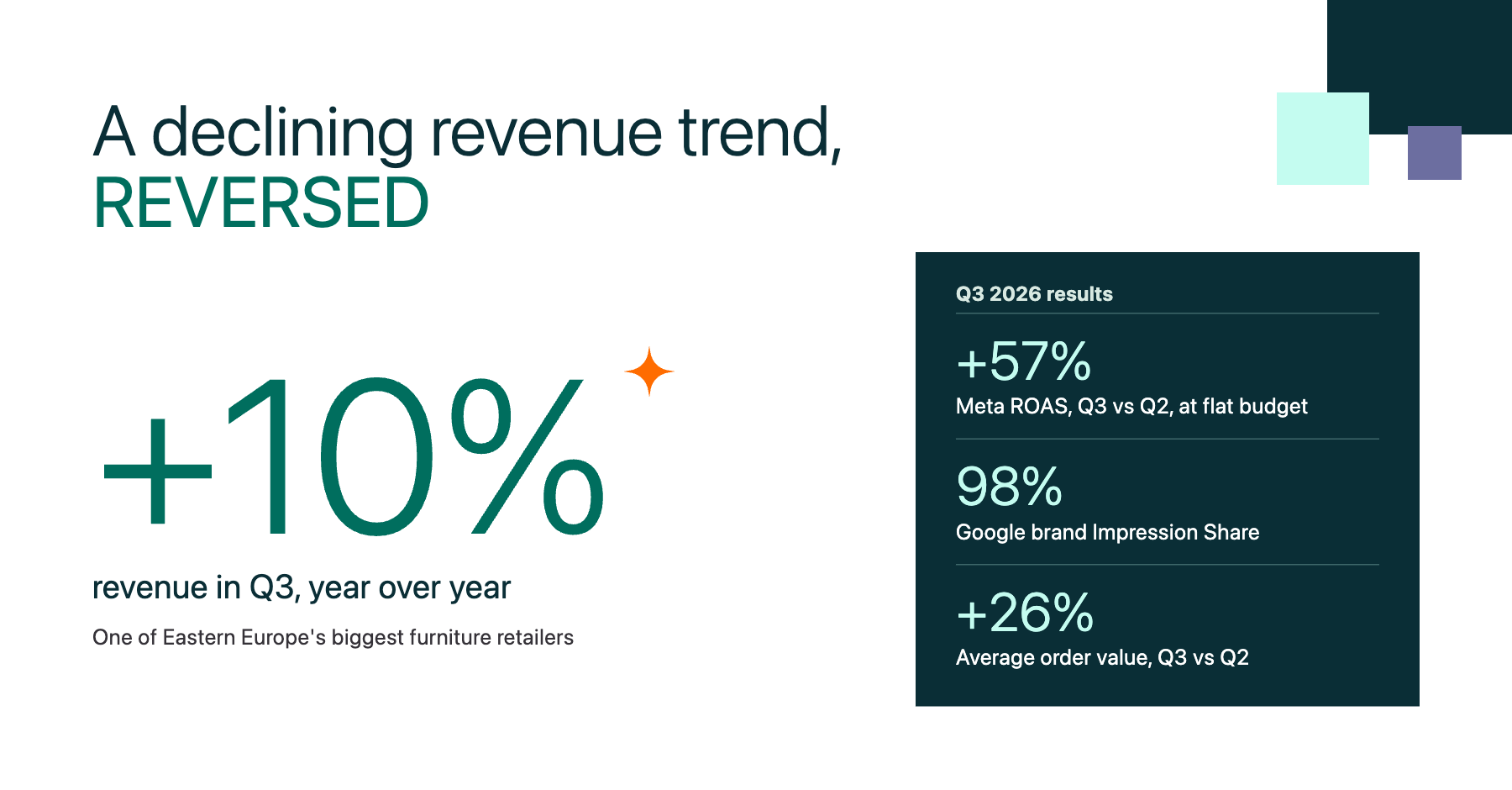
We reversed a declining revenue trend and achieved sustainable growth in Q3, with revenue up 10% year over same period last year.
What we delivered
Project Info
The revenue was in a consistent decline and this furniture retailer needed a quick turnaround
The challenge
Our client is one of the biggest furniture retailers in Eastern Europe - an established name with a large catalogue covering sofas, beds and mattresses, kitchens, wardrobes, dining tables and chairs, chests of drawers, and furniture for every room, backed by a strong retail presence with physical stores across the market. Operating at this scale, with millions of people reached every quarter, even small structural inefficiencies compound into serious wasted budget. And the paid setup underneath was working against the brand - on both platforms.
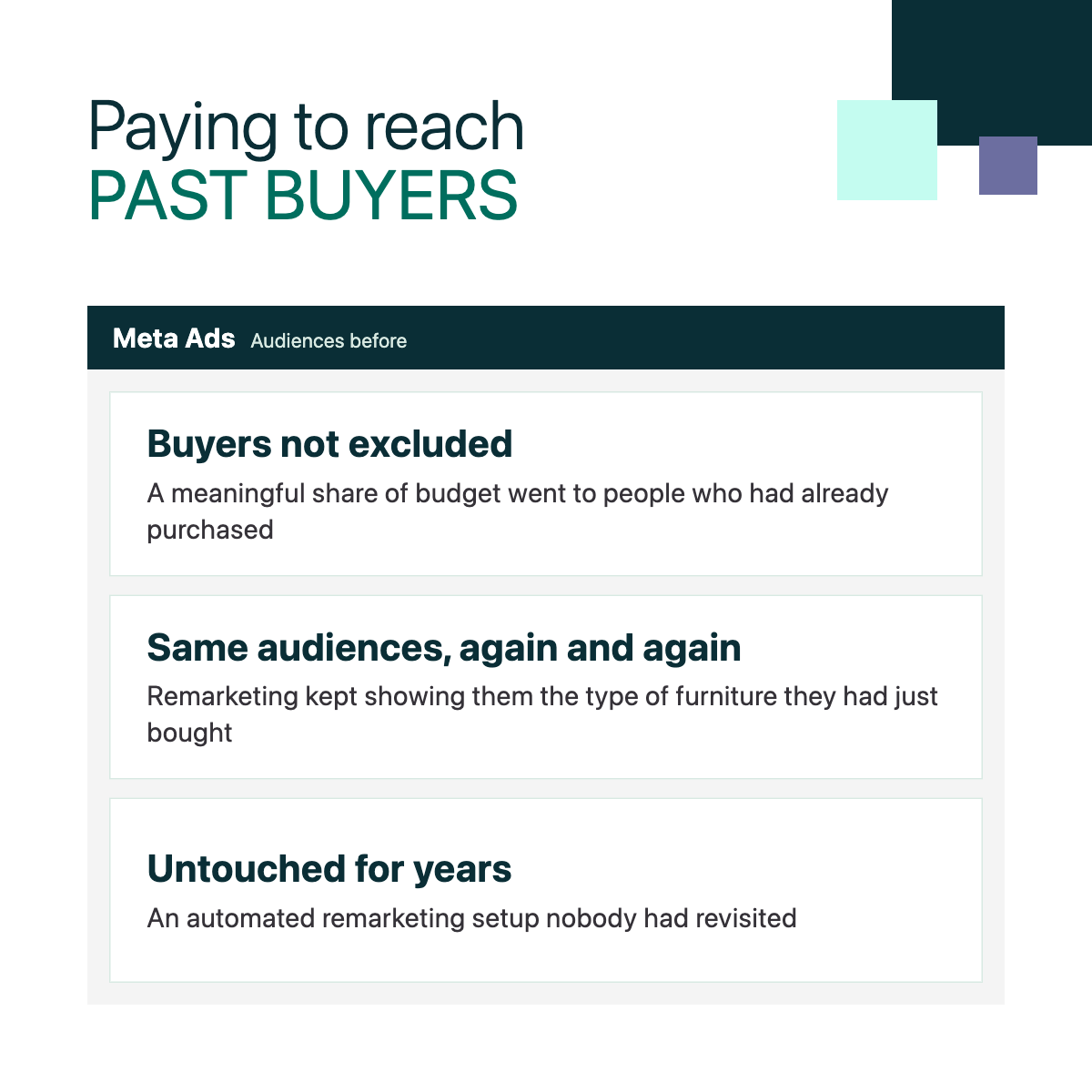
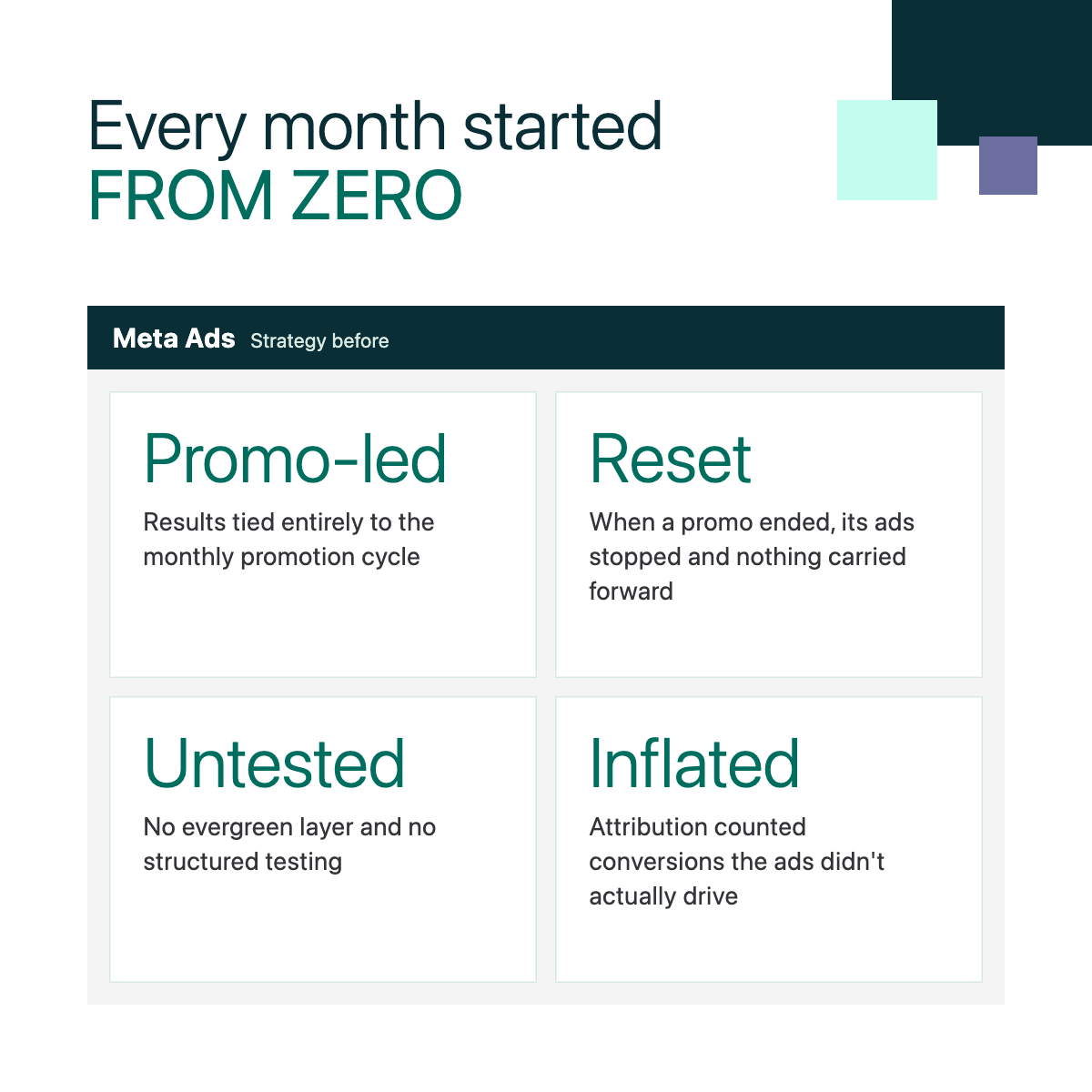
On Meta, a meaningful share of the budget was being shown to people who had already purchased - remarketing kept reaching the same audiences again and again, often with ads for the very type of furniture they had just bought. Results were tied entirely to the monthly promotion cycle: when a promo ended, its ads stopped, the next ones started, and nothing was learned or carried forward. There was no evergreen layer, no structured testing, an automated remarketing setup untouched for years, and attribution settings that inflated reported results with conversions the ads didn’t actually drive.
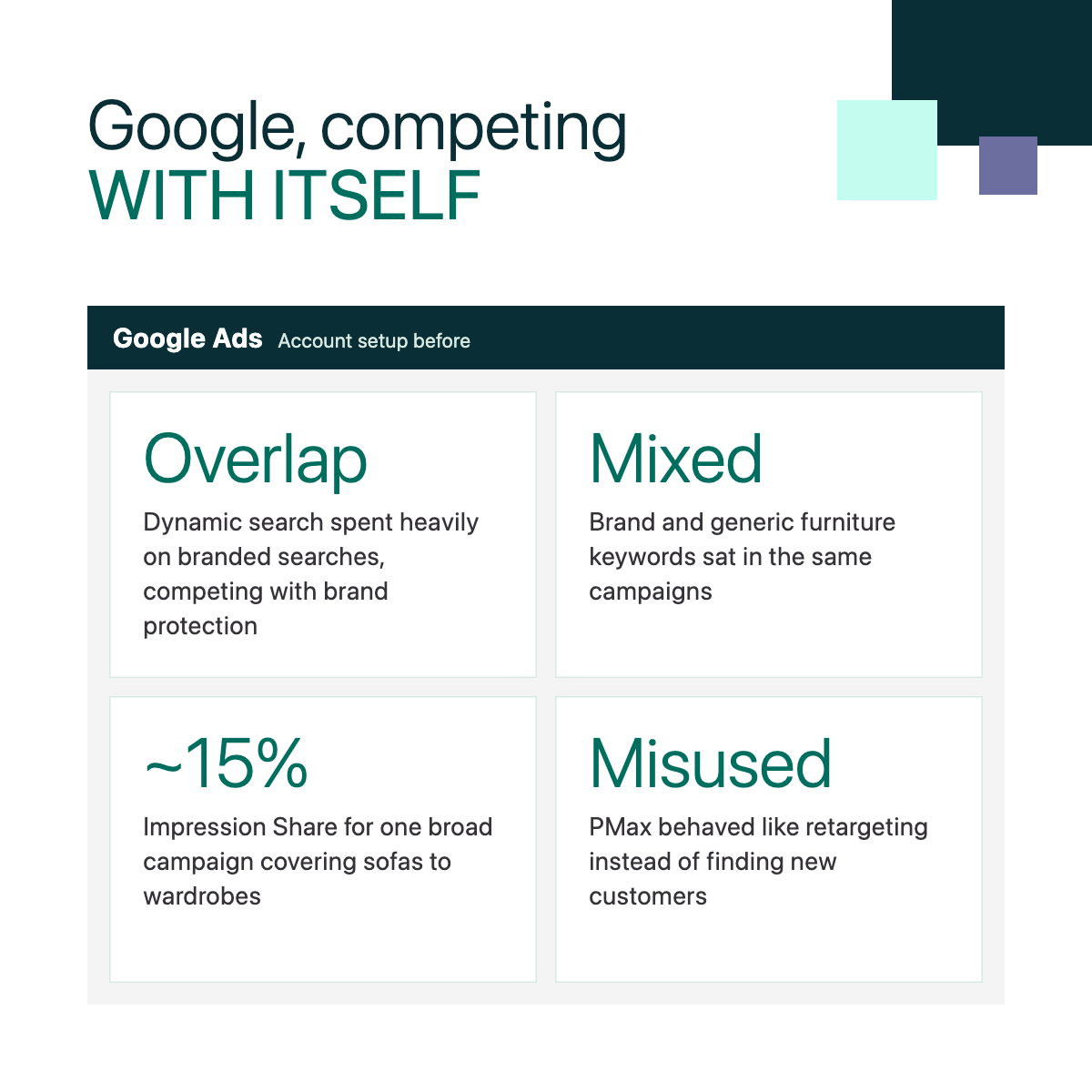
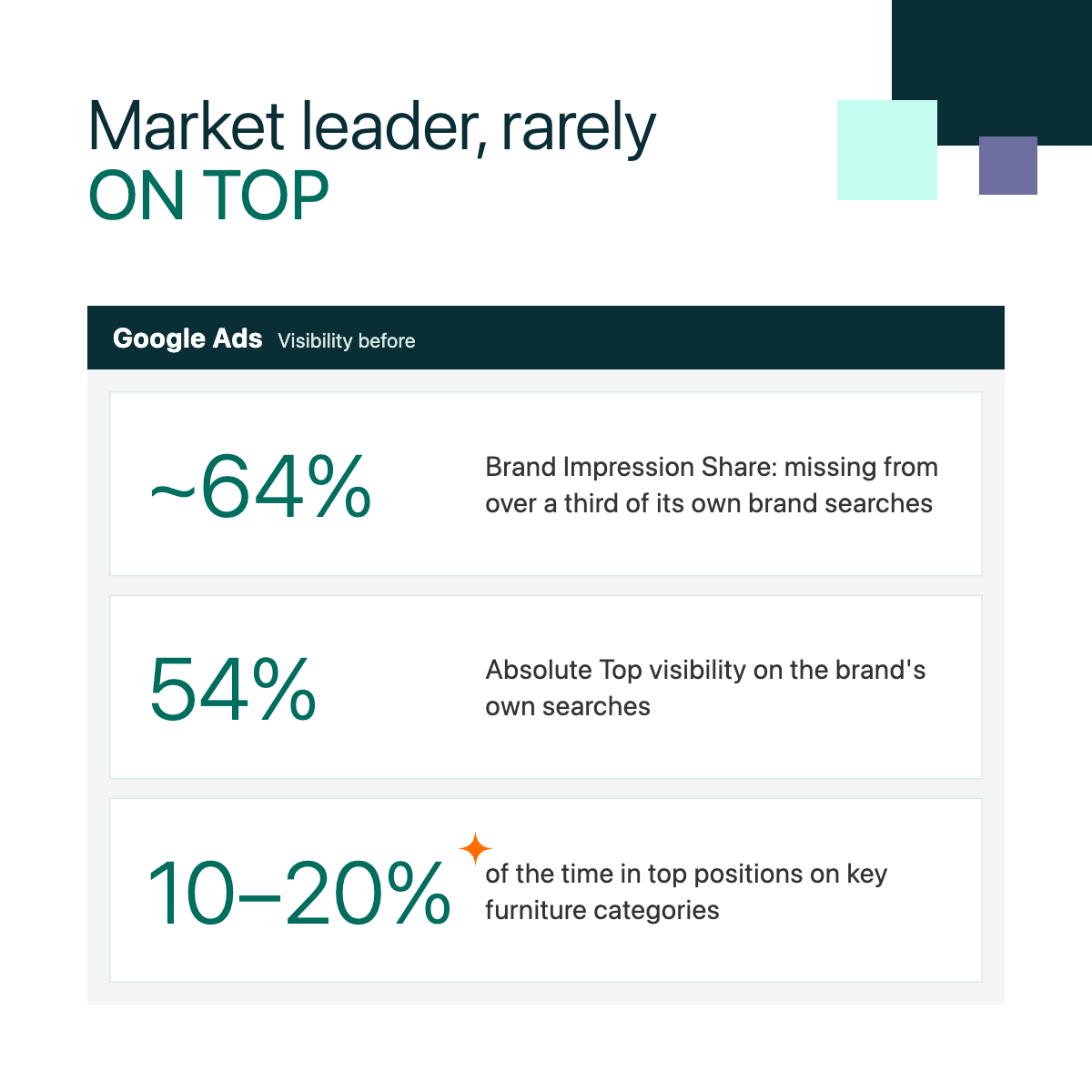
On Google, the account was cannibalising itself. A dynamic search campaign was spending heavily on branded searches - competing directly with the brand protection campaign. Brand and generic furniture keywords were mixed in the same campaigns, one broad campaign tried to cover everything from sofas to wardrobes at ~15% Impression Share, and PMax behaved like retargeting instead of acquiring new customers. For a brand of this size, the visibility gap was striking: on key furniture categories, it held top positions only 10-20% of the time.
How was the VISIONARY implemented?


Value-driven positioning
Intelligent media buying
Agile creative
The execution
A Meta account rebuilt from zero
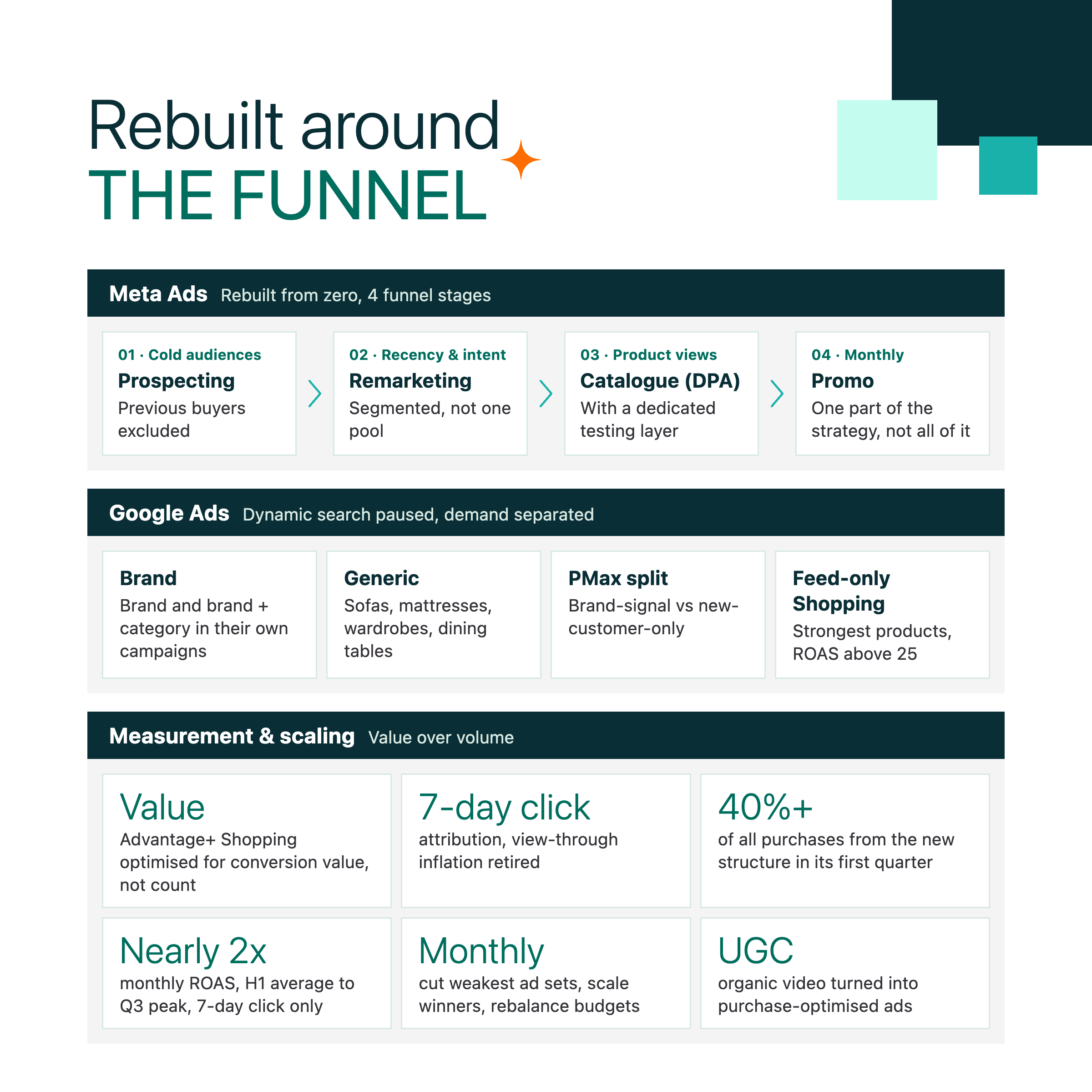
We replaced the inherited structure with clean funnel stages: prospecting for cold audiences, segmented remarketing by recency and intent, catalogue (DPA) campaigns with a dedicated testing layer, and a monthly promo campaign that is one part of the strategy - not all of it. Previous buyers were excluded where they didn’t belong, and the new campaigns earned their place with data: within the first quarter, the rebuilt structure was already generating over 40% of all purchases.
Value over volume
The biggest unlock came from optimising for conversion value instead of conversion count. Advantage+ Shopping campaigns built on value optimisation - launched from scratch mid-year - became the account’s strongest structures, repeatedly absorbing budget increases while improving efficiency and driving the highest basket values in the account. In a category where a sofa, a bedroom set, or a full kitchen can differ in value several times over, optimising for value - not volume - is what made scaling profitable.
Honest measurement
We migrated the account step by step to 7-day click attribution, retiring view-through-inflated setups - so reported results reflect customers the ads actually convinced. The growth held up under the stricter lens: measured on 7-day click only, monthly ROAS nearly doubled from the first-half average to its Q3 peak.
Google, restructured around the funnel
We paused the self-cannibalising dynamic campaign, separated brand, brand + category, and generic furniture demand - searches like sofas, mattresses, wardrobes, and dining tables - into their own campaigns, split PMax into brand-signal and new-customer-only, and added a feed-only Shopping campaign for the strongest products holding ROAS above 25.
Continuous optimisation
Monthly, we cut the weakest ad sets, scaled proven winners across product categories - from bedroom furniture to sofas - rebalanced budgets between funnel stages, and tested new audiences and creative, including turning organic UGC-style video into purchase-optimised ads.
The results


Meta ROAS up 57% quarter over quarter - at flat budget
98% Brand Impression Share on Google
One connected growth system
Meta ROAS up 57% quarter over quarter - at flat budget
98% Brand Impression Share on Google